
As we celebrate 90 years of faithful work for justice and equity this year, we’re sharing stories of 90 Years Rooted in Faith that reflect the heart of the North Carolina Council of Churches. Each month, you’ll hear from staff and long-time friends of the Council as they highlight the transformative impacts we’ve had on our community and our vision for the future. Stay tuned for these inspiring reflections throughout the year!
by George Reed, Former Executive Director of the North Carolina Council of Churches
I came to North Carolina in 1978 to work for the Christian Life Council (CLC) of the Baptist State Convention. My work focused on legislative advocacy, hunger, and peace and justice. One of my first assignments was to represent the CLC on the North Carolina Council of Churches’ Equal Rights Amendment Committee. It was my introduction to ecumenical justice work, and it resonated deep within my soul. While I can’t go too far in naming names (at the risk of omitting someone), the contact with Sr. Evelyn Mattern, Bett Hargrave, and Beth McAllister was a splendid introduction to ecumenism.
After I left the Baptists, Collins Kilburn approached Sr. Evelyn and me about sharing the position of program associate, which she had filled earlier and which had become vacant again when the Rev. Jimmy Creech moved out of state. We agreed to do it, with me taking one-quarter of the position, doing the Council’s legislative advocacy. Sr. Evelyn took the other three-quarters, focusing on farmworker/immigration issues, equal rights, and economic justice.
When I took this position, I knew that Collins was just a few years away from retirement. I remember hoping that whoever followed him would be amenable to Sr. Evelyn and me continuing to job-share. So, when the search for his successor got started, I was really caught off guard when a Council leader said to me, “You are going to apply for Collins’ position, aren’t you?” I was humbled and honored to be selected as executive director. I initially thought of it as filling Collins’ incredibly large shoes, but over time came to realize that it meant standing on his incredibly strong shoulders.
My first official act was to represent the Council at the consecration and installation of Michael Curry as the next Bishop of the Episcopal Diocese of North Carolina. It was a glorious service in Duke Chapel, and Michael became a strong friend of the Council. How appropriate that he is the featured speaker at our 90th anniversary celebration!
My fifteen years as Executive Director saw significant transitions in programming and in funding. In programming, the Council continued the work it had done for decades, focusing on human rights and justice issues, with an expanded program on immigration. But it also added what became North Carolina Interfaith Power and Light and, later, the focus on the health of our congregants through Partners in Health and Wholeness.
Regarding finances, the Council had already lost funding from a significant member body because of the Council’s stand on a controversial issue. (Blessedly, that funding was restored during my tenure.) Other member denominations had their own financial challenges and had to reduce their contributions. So it became necessary for us to expand Collins’ greater emphasis on individual contributors. We had one extremely generous benefactor inherited from Collins’ days and a growing number of generous individuals. In addition, we sought funding from supportive congregations and from some of the state’s most generous foundations, including Z. Smith Reynolds; Kate B. Reynolds; Blue Cross, Blue Shield of NC; and The Duke Endowment.
I cannot conclude without mentioning the wonderful and committed staff members, Board leaders and denominational leaders I was privileged to serve with. I cannot name them all, but the powerful work of the Council throughout my time there was because of them. My eternal gratitude to each!
ABOUT THE AUTHOR
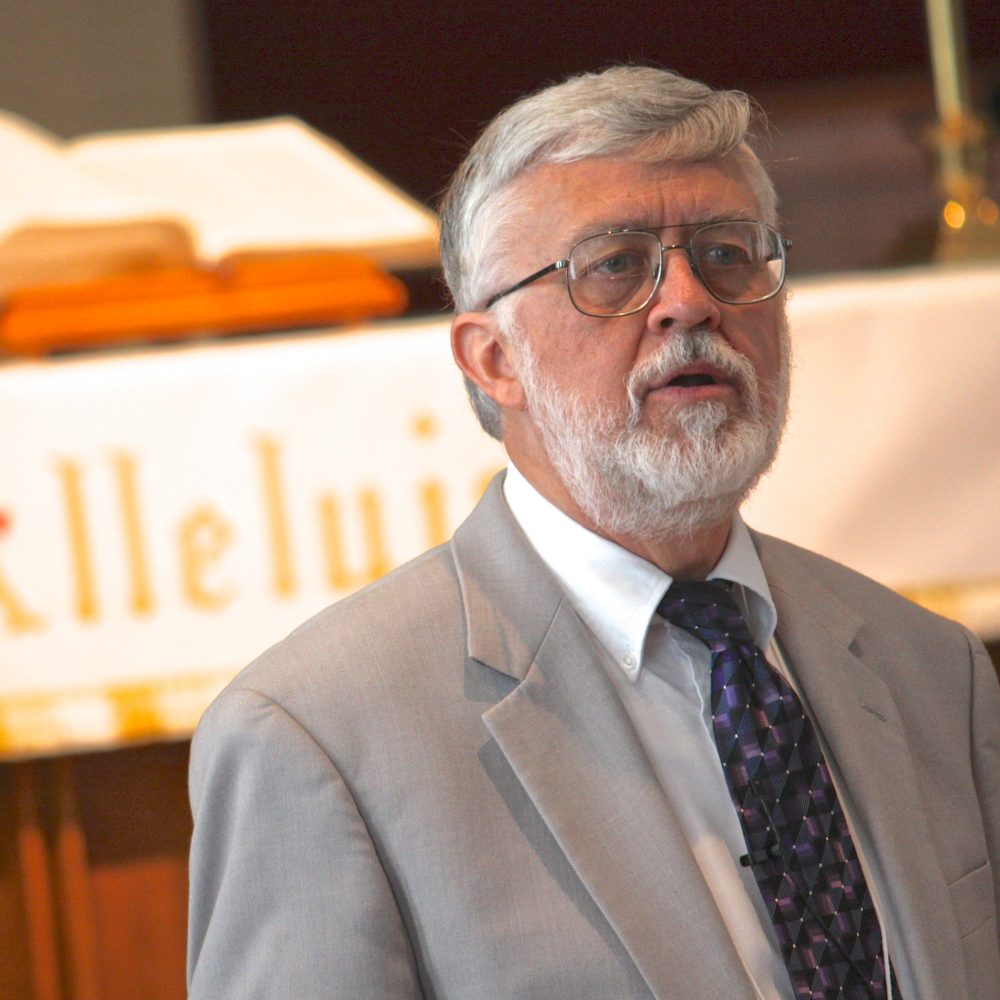
George Reed
George Reed served as Executive Director of the North Carolina Council of Churches for 15 years, following 18 years with the organization. Under his leadership, the Council expanded programs in immigration advocacy, health and wholeness, and interfaith collaboration, growing from a four-person staff to a vibrant team of ten, along with volunteers and interns. Known for his deep commitment to justice and ecumenical service, George retired in 2015, leaving a legacy of strengthened programs, dedicated staff, and lasting impact on faith-driven advocacy in North Carolina.
Join us in continuing this legacy of justice and courage. Your gift supports the Council’s work for equity and compassion across North Carolina. Donate today.
