
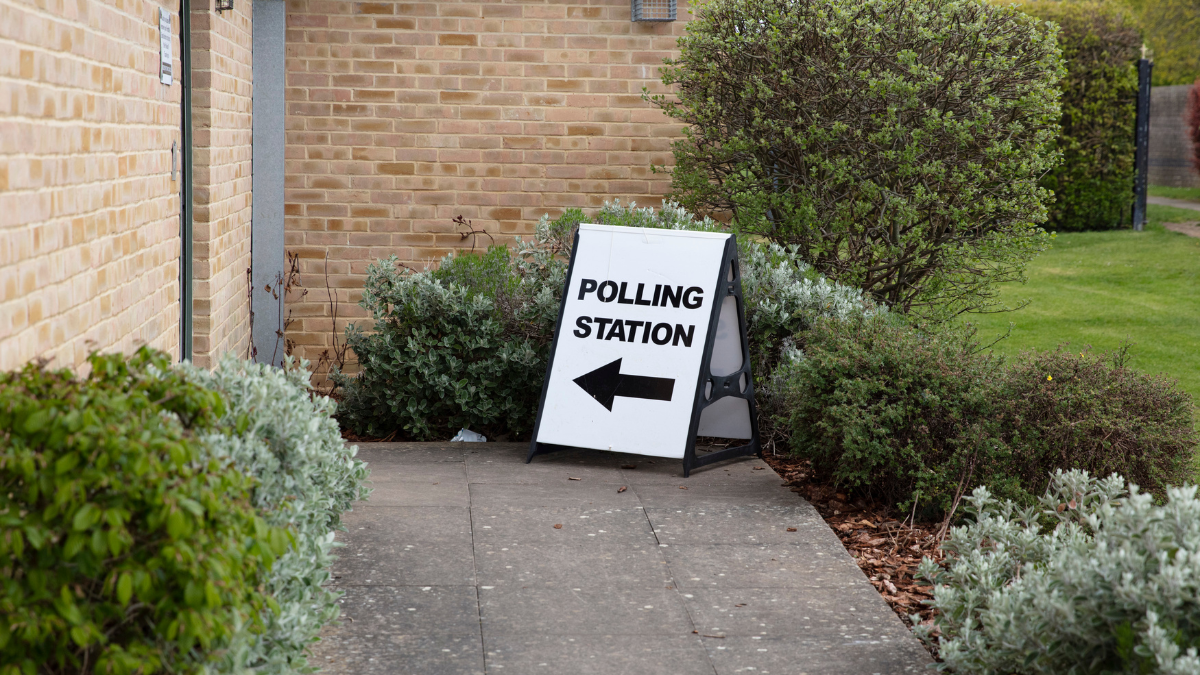

Groundhog Day, Valentine’s Day, Presidents Day: Ah, the familiar milestones of February. Now comes a less-familiar one, sort of sneaking up – the start of early voting for North Carolina’s March 3 primary elections.
Feb. 12 is when voters will begin choosing political parties’ candidates to appear on general election ballots in November. It’s not a presidential election year, so typically the turnout shrinks. What’s hard to miss is that the Republicans who control North Carolina’s election system – in general alignment with the Trump administration – hope that the midterm shrinkage works to their advantage. And they’re trying to make sure it does.
Sometimes one almost has to chuckle at their efforts to explain themselves. Consider poor Francis De Luca, Republican chairman of the State Board of Elections and a cheerleader for the notion that the fewer of those voters, the better.
The occasion was a Jan. 13 board meeting where decisions were made about early voting sites and hours in several counties whose own boards had failed to agree. Those disagreements usually pitted a three-person Republican majority – an edge guaranteed by the GOP-ruled General Assembly in a makeover of election laws in late 2024 — against two Democrats.
A key issue was whether counties would be required to let people vote on Sundays during the upcoming early-voting period. African-American church congregations often have mounted Sunday “souls to the polls” efforts to increase turnout in a way that maximizes their leverage.
As reported by Lynn Bonner of NC Newsline, the state board nixed Sunday voting in five counties. In four of them, local boards’ Democratic members favored it but were overruled by their GOP colleagues. In the fifth, the board’s Republican chairperson agreed with the two Democrats – but the state board’s Republicans must have figured she didn’t get the memo.
De Luca made it clear that he disagreed with opening the polls on Sunday despite its popularity with some voters, especially Black church-goers. His explanation both ran afoul of the principle of church-state separation and defied common sense about how most people live their lives.
“I don’t think we should be voting on Sunday,” Bonner quoted him as saying. “I know a lot of people who do nothing on Sunday because that’s the Lord’s day.”
Yes, the Ten Commandments instruct the faithful to remember the Sabbath in order to keep it holy. Well and good, and De Luca and his friends are entitled to take their piety to the extreme by doing “nothing” on the day they regard as their Sabbath.
But come on. Using this strict interpretation of an ancient Jewish religious decree as a reason to deprive willing voters of a chance to vote on a day that’s convenient for them – even in many cases after they’ve shown their own piety by attending church – is a ludicrous excuse to cut back on voting by folks who often see their interests in conflict with Republican values and policies.
In other words, it’s an attempt to impose an extreme religious doctrine on the entire electorate when it helps hold down votes that tend to lean Democratic – or, in a primary, that might tend to favor candidates well-suited to compete against Republicans in the fall.
De Luca could have echoed some local officials who cited the costs of operating polling places on Sunday during low-turnout primaries. That’s perhaps a fair concern. Or he could have stood with the doctrine of not requiring people to work on Sunday, thus giving them more personal time off – whether to attend church, go grocery shopping or watch football. But even Chick-fil-A can’t expect its employees to spend their Sunday PTO in solemn reflection, doing “nothing.”
For the Scripturally inclined, it’s also worth noting that Jesus is said to have rebuked the Pharisees who criticized him for healing people on the Sabbath because, they claimed, it amounted to working. To paraphrase, he told them to get their priorities straight. The same could be said about offering people a chance to vote on a day that, for many, best fits their schedule.
The state board turned down voting plans for the primaries where Democratic local board members had supported Sunday voting in Brunswick, Craven, Columbus, Greene and Harnett Counties. The boards’ majority Republicans had been opposed to the plans – except in one case, when the Columbus board’s Republican chairwoman sided with her two Democratic colleagues. Democratic state board member Jeff Carmon zeroed in on the hypocrisy when he asked, as reported by NC Newsline: “What are we doing if we don’t support what the chair of this particular board believes?”
Voting lessons
Meanwhile, the state board also backed Republican officials in several counties where the issue was whether to make voting in the primaries more accessible to college students. The board ended up rejecting student-friendly polling places at N.C. A&T State University, UNC Greensboro, Western Carolina University and Elon University, even though some on-campus sites have been used in recent years.
N.C. A&T students flocked to the Jan. 13 meeting to support voting on campus as a means of encouraging student participation in the democratic process. But they were up against a Republican mindset that sees convenient voting for college students as an undeserved luxury that also helps boost Democratic totals – plenty of reason to oppose it!
The primary elections on March 3 will attract voters who want to have a voice as the state’s Republican and Democratic Parties choose their candidates for the November showdown. Citizens who are registered party members can vote only in that party’s primary. Unaffiliated voters – now in the majority statewide – can vote in the primary of their choice.
Stakes in the general election – known as the midterms because they fall midway through the presidential election cycle – will be high indeed as every seat in the U.S. House and a third of the Senate’s seats, along with every seat in the General Assembly, will be in play. Inevitably and appropriately, the balloting will become a de facto referendum on President Trump and his norm-shattering, chaos-inducing administration.
Republicans throughout the land know that the party holding the White House typically doesn’t do well in midterm elections, and Trump himself has acknowledged that loss of the GOP’s ultra-thin majority in the House likely would lead to his third(!) impeachment. Republican strategists are correspondingly desperate to shape the electorate in ways that might tamp down the predicted backlash against Trump and his Capitol Hill allies, not to mention other GOP candidates down the ballot.
In North Carolina, that means scrounging for tactics to protect Republican legislative seats and the party’s dominance in the state Supreme Court. And the state’s marquee race in November, to fill the U.S. Senate seat being vacated by Republican Sen. Thom Tillis, looms large in determining whether the Senate stays in Republican hands for the balance of Trump’s term.
Executive stretch
The president continues to stretch the boundaries of executive power in previously unthinkable ways, both abroad and at home. His focus on our systems of elections – in which he and his cohorts seek to influence outcomes via manipulation of voting rules and of the electorate’s makeup – gives his ripening authoritarianism an especially sinister twist. It bids to subvert the very foundation of our democracy, in which just power is supposed to be derived from the consent of the governed.
Still maintaining against all evidence that he was cheated out of an election victory in 2020, Trump and his “election integrity” enforcers now seek to make it harder for perceived likely opponents to vote, citing overblown dangers of illegal voting by non-citizens and other rule-breakers.
That push is trickling down into North Carolina as Republicans tinker with election procedures in ways that could put honest citizens’ privacy at risk while forcing them through unnecessary and inconvenient hoops to cast their ballots. Absentee voting by mail is becoming so onerous and deadline-limited that its use – favored by Democrats since the pandemic – is almost sure to dwindle.
The president now seems ready to mount a frontal assault on the Constitution’s assignment of election supervision to the states, not to the executive branch controlled from the White House. Recent seizure by the FBI of Georgia voting records left over from the disputed 2020 election – with Trump actually on the phone to agents during the raid – suggests that the country may be heading down a dark path when it comes to holding elections worthy of public trust.
Whether or not voters in five North Carolina counties can cast their primary ballots on a Sunday later this month, and whether students at four universities must leave their campuses to vote, are factors of modest significance amid the panorama of voter suppression that Trump and his enablers are painting.
But the State Board of Elections, under Republican control since late 2024’s legislative power play transferring election oversight to the newly elected Republican state auditor, has already displayed its willingness to cooperate with the Trumpian playbook.
Looking toward the fall, that’s likely to mean more obstacles thrown up to impede ordinary, patriotic citizens who simply want to have their say at a pivotal juncture in their country’s history. That amounts to a summons to all of us concerned about where America is heading – a summons to cast those votes, no matter what.
