
The following sermon was delivered by the Rev. Dr. Jennifer Copeland on Sunday, March 22, 2026, at Central United Methodist Church in Asheville, NC.
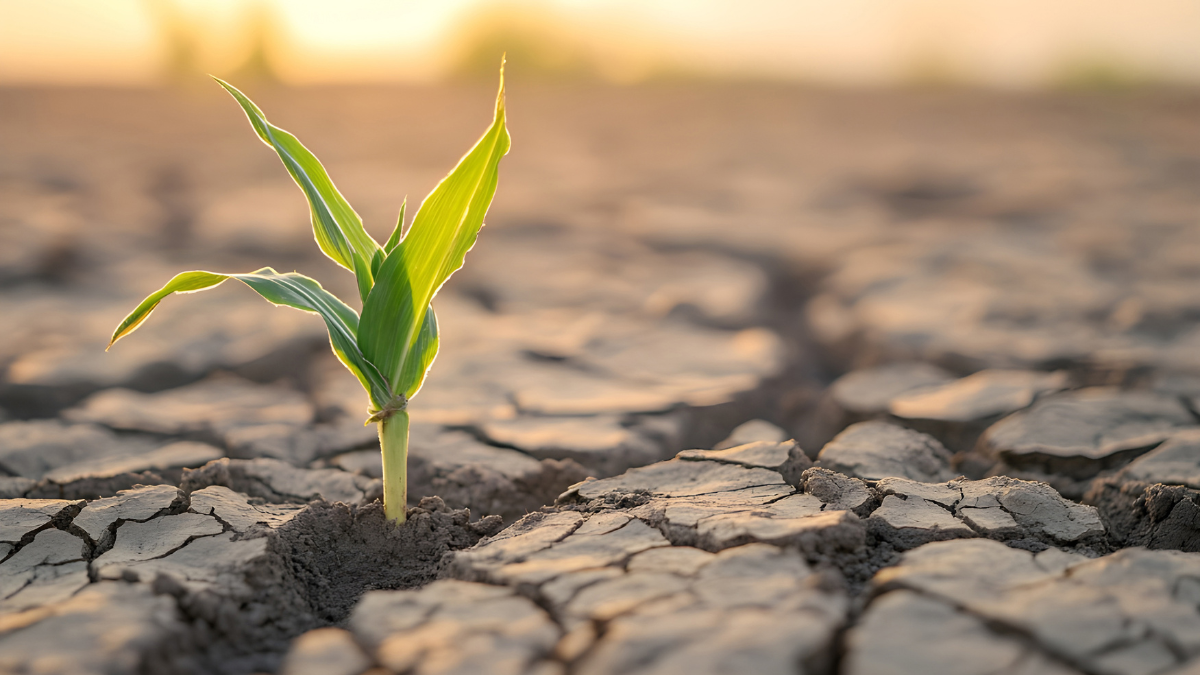
The valley of the dry bones, a place of unending disappointment, continuous defeat, and unmitigated sorrow. Feels like my life right now. I won’t bore you with my personal details. They’re not spectacularly worse than anyone else’s, but they’re mine and they’ve piled up. It’s a lot.
And then, our country started a war with an adversary in the middle east, which has proven to be a bottomless pit in the past. Before that our government was snatching my neighbors, literally pulling them off the street when they dropped off their children at school, literally breaking down their doors and dragging them out of their homes—in my neighborhood, not just on the news. And there is a measles outbreak in my hometown, only 70 miles from here down I-26. Suddenly years of childhood disease research is being tossed out in favor of natural immunity or homeopathic remedies. I would suggest folks spend some time in a church cemetery among the graves that are roughly a hundred years old. Many of those tombstones mark the graves of children, children who only lived a few years, children who died before we had vaccines. I have a one-year old granddaughter. You better believe she got her measles vaccine the day she was eligible and before that, we didn’t allow her near children who weren’t vaccinated. I never had to think about that when my own children were babies. We just got the vaccines. All of them.
The valley of the dry bones. When Ezekiel walked in there, it was the same story with different details. The war was with Babylon and it was already over. He was part of the remnant of Israel deported to Babylon after Jerusalem was destroyed and the temple desecrated. Instead of ICE breaking down their doors, the invading nation did so. Ezekiel and his neighbors were stripped of their homes, their land, their material possessions, in some cases, their families, and, of course, their faith. Their faith made claims about land and location. Their faith offered strength through the story of displaced people who were given a place. Only now that place belongs to the Babylonians and those to whom it was promised now live in Babylon.
Does that make the Babylonians God’s people now? Is it all about the land? Those were some of the dry bones Ezekiel was confronting. We move around so much it’s hard to identify with this land issue. To put it in perspective, Ezekiel’s people had lived in that place for over half a millennium—twice as long as this soil has been called the United States of America, leaving aside for the moment the story of displaced people associated with the United States. For Ezekiel’s people, when the land suddenly has somebody else living on it and you have to move to another place, where does God show up? Most people assumed God stayed in Jerusalem because that’s where the temple was, and because the people could no longer worship in the temple, they assumed they were cut off from God, like a valley of dry bones.
Three times God comes to talk to Ezekiel to talk about those dry bones. “Can these bones live?” God wants to know. Ezekiel deflects, “Oh lord God, you know.” “Prophesy to these bones,” God says, and Ezekiel is probably thinking, whatever. He does prophesy and the bones get some sinew and some flesh and some skin. Next God says, “Prophesy to the breath, mortal . . . say to the breath, come from the four winds.” This is not just any breath: ruah—breath of life. The same breath with which God created our world. “A wind—ruah—from God swept over the face of the waters. Then God said, “Let there be light.” That’s the breath God told Ezekiel to call from the four winds. The breath came and the cadavers came to life.
Here’s the thing. It’s not enough just to live, to go through the motions day after day, not dry bones any longer, but not flourishing people either. It takes one more thing for us to truly live. It takes hope. One last time, God tells Ezekiel, “They say, ‘Our bones are dried up, and our hope is lost,” but you tell them, “I will put my spirit within you, and you shall live.” Flesh and bones, recipients of the breath of life, now have hope for living.
Hopeful living trusts in the future in spite of the future-denying present. If we don’t grasp that concept, first and foremost, we can never do the work we are called to do in the political community. That’s what you asked me to come here and talk about, right? Politics. How do we, God’s people, faithfully engage the legislative process? If we don’t have hope in God’s future, there’s no point in starting. The valley of the dry bones will wear us out.
Besides reading Ezekiel to prepare for this sermon, I also read the Book of Discipline. Not the whole thing; just paragraph 163, The Political Community. I’ve been telling people for years, long before I took this job, that when we go in the voting booth we should ask ourselves: Who should I vote for today that will make life better for my neighbors? Para. 163 in the Book of Discipline opens with this statement, “Our involvement in political systems is rooted in the gospel imperative to love our neighbors.” And I thought I had made it up.
There it is, loud and clear—we are called into the public square by the gospel. Some weeks I probably spend more time at the N.C. General Assembly than I do in the office. But the real work I do is not talking to tone deaf legislators, it is talking to people like you. Helping all of us creatively make the connection between our faith and the policies governing our lives. I think it’s possible to read the entire bible as a policy blueprint. There are ideas for food security, affordable housing, wage equity, land distribution, reducing the wealth gap, just for starters. There are instructions on civil disobedience, voting rights, and election integrity. We have to translate old systems into new systems, relate ancient rituals to modern practices, and grasp the differences between work of shepherds and the work of non-profits. But the outlines are all there.
Even the parts that make us uncomfortable are a commentary on bad policy, showing us the unintended consequences of such policies. Think of Jeptha’s daughter—text of terror, if ever there was one. She paid the price, Jeptha just had to live with it. But the bad policy of child sacrifice ended right there for the Hebrews and that story made the cannon cut as an example of bad policy. Book of Judges, look it up.
We have a lot of bad policies in our communities that need to end. We can mine the scriptures to learn from bad policy mistakes and correct them, but more importantly, we can study the scriptures for good policy solutions like I listed above. The imperative to love our neighbor—neighbor as defined by the story of the Good Samaritan, in other words, everyone—is the north star. Love God; love neighbor.
To that end, when we are talking about healthcare subsidies and insurance co-pays, and the more esoteric physician practice acquisition and PBM consolidation, I often remind people, Jesus was the original universal healthcare provider. Healing those who came to him on their own, who were brought to him by others, and sometimes those he was simply told about by others. Like the syro-phonesian woman’s daughter. Jesus never saw the daughter; only the mother to whom he said, “Great is your faith . . . let it be done.” The insurance industry, medical apparatus, and the pharmaceutical companies are mechanisms for making money, but Jesus was in the business of healing people. I have a whole presentation, complete with slides, that shows the rationale of healthcare for all or medicare for all or universal healthcare or whatever we want to call it. My best slides come right from the Bible and lean into our Christian history. Remember, it was the Christians who created the first hospitals.
I also point out, when discussing immigration policy, that the three most protected categories in scripture are widows, orphans, and immigrants. Immigrant is sometimes translated: stranger, sojourner, refugee, even alien in some versions. But the meaning is clear; God is talking about the people who are not from around here, who in the day of Old Testament community structure, had no rights. Because they had no legal standing in the community, just like widows and orphans in a patriarchal society, God called us, community members, to protect them. Widows, orphans, and immigrants are a constant refrain throughout scripture because they were the most vulnerable people in town. We should ask ourselves, who are the most vulnerable people in town today and we should answer the same way God has expected us to answer for millennia—we answer by protecting them.
We could take it one step further and consider what it means for protection to go from charity to justice. For example, in addition to a food pantry or daily feeding ministry to feed the modern version of vulnerable, what does it mean to work for a community where everyone always has enough to eat? It might mean the agri-business economy, receiving massive farm subsidies, changes its model. What if farm subsidies could only go to owner occupied farms and not agricultural conglomerates? 60% of the subsidies go to the largest 10% of farms. Farm subsidies are not going to the Little House on the Prairie. We could change that making food more accessible and perhaps healthier.
So far I’ve talked about caring for the sick, welcoming the stranger, and feeding the hungry. That’s what refracting policy through the lens of faith looks like, because the sick and the immigrants and the hungry that we’re talking about are not in the ancient near east or first century Palestine. They’re right here. They are our neighbors. And the only way things get better for our neighbors is when the policies that bracket our lives change to support the vulnerable. And the only way they will change is for us to be like the widow banging on the door of the unjust judge using our prophetic imagination to reframe policy and elect people who will listen to our call for justice.
That said, no matter what scripture or the Book of Discipline suggest, we can’t do this work unless we are grounded in hope. Hope rejects the fatalism of the current situation by recognizing that we don’t have the right to make that assessment. Just because we can’t find any possibility, does not mean none is there. Where God is present, impossibility is absent. Hopeful living trusts in God’s possibility. Hopeful living changes our perspective.
By all accounts, when despair ought to win the day, the story of God’s people is a history lesson in possibility, it’s a story of moving forward in hope even when the outward appearances look like a valley of dry bones.
- People standing on the edge of the sea with an army bearing down behind them are in despair. Then the sea parts, dry land appears, and the people walk across. “Can these bones live?” Yes, they can.
- The Babylonians defeat a nation, move their people into exile to a land far, far away. The people emerge two generations later, stronger than they were before. “Can these bones live?” Yes, they can.
- The leader of a truly world-changing movement is captured by the authorities, tortured and killed right in front of his friends, friends who then spend the next 36 hours hiding. Then one of the women shows up with the message, “I have seen the Lord.”
“Can these bones live?” Yes, they can.
Ezekiel throws caution to the wind in an effort to hear God’s truth. Calculating this risk may be the greatest challenge to hopeful living. Even in the midst of tumultuous circumstances, the horrible familiar is often more desirable than the unknown unfamiliar. That’s why people stay in abusive relationships—there’s a real chance things could get worse if we leave. So, we adjust and stay. Low risk.
Ezekiel’s hope-filled act of showing up in a valley of dry bones testifies that God’s future is worth the risk. Obviously, hopeful living does not guarantee the achievement of private expectations because we’re not in this for ourselves. We’re in this for our neighbors and, hopefully, our neighbors are in it for us. History viewed this way is linear, not cyclic, not repetitive. The future can be changed by those who enter hopefully into covenant with God. By recalling the past and focusing on the future, we make a powerful faith statement about our lives right now. Right now, we have hope.
“Can these bones live?” Yes, they can. Thanks be to God.
