
As we celebrate 90 years of faithful work for justice and equity this year, we’re sharing stories of 90 Years Rooted in Faith that reflect the heart of the North Carolina Council of Churches. Each month, you’ll hear from staff and long-time friends of the Council as they highlight the transformative impacts we’ve had on our community and our vision for the future. Stay tuned for these inspiring reflections throughout the year!
by the Rev. Dr. Charles Smith, former Chair of the Personnel Committee of the North Carolina Council of Churches and recipient of the Council’s Distinguished Service Award (2011)
Ecumenism was popular in 1966 when I returned from a year as Senior Assistant Minister at St. Machar’s Cathedral (Church of Scotland) and four months as Protestant Chaplain to the Highland Regiment of the British Army in Aberdeen, Scotland. I then moved to Greenville, N.C., where I was appointed to start a Methodist congregation. Shortly thereafter, I met the Rev. Dr. Sam Wiley, a Presbyterian minister who led the North Carolina Council of Churches. We became friends, and he introduced me to the work of the Council. Subsequent directors, Collins Kilburn and George Reed, drew me even closer to this body. As I neared retirement over 50 years later, at that time serving as Chair of the Personnel Committee, it was my pleasure to help hire the Rev. Dr. Jennifer Copeland as its current leader.
Over the decades, the Council increased its influence in the N.C. Legislature, as both Collins Kilburn and George Reed were effective lobbyists promoting positions adopted by the Council’s Governing Board. Meanwhile, Sister Evelyn Mattern was highly regarded as a member of our staff, along with the Rev. Jimmy Creech. The Council hired Jimmy Creech after the North Carolina Conference of The United Methodist Church failed to appoint him to a charge because of his unwavering support and strong advocacy for LGBTQ people. This hire, along with other forward thinking positions taken by the Council over the years, provoked both my North Carolina Conference of the United Methodist Church and the two Roman Catholic dioceses of N.C. to withdraw financial support from the Council. Together, those three bodies represented a significant part of our total income. As it was, individuals from those denominations stepped in to make up the difference and for the first few years, we actually received more financial support than we had lost. Eventually, my United Methodist Conference voted to return funding and for a few years became the leading financial denominational supporter. The Roman Catholic dioceses, sadly, abandoned membership in the Council altogether, but our Board’s Nominating Committee is careful to always place a Roman Catholic in one of our at-large seats to help maintain this important connection.
In spite of negative external pressure the Council worked valiantly and consistently for state laws reflecting values for diversity, equity, and inclusion–also known as Christ’s call for the People of God. We lost some, such as the struggles against the education lottery and for adoption of the Equal Rights Amendment. We won campaigns such as ending payday lending and banning smoking in restaurants.
While other state councils across the country reduce staff and programming, we have been fortunate to establish partnerships and create programming allowing our staff to grow and our reach to broaden. Today, the Council’s future seems secure, thanks to the ongoing excellent leadership of its Executive Director and the dedication of its expanded staff.
Personally, I was delighted to help plan and host the Council’s 50th anniversary in Goldsboro and the 75th anniversary in Durham. I was also honored to receive the Distinguished Service Award in 2011. Finally, I have always celebrated the fact that the Council was founded on the Duke University campus in 1935, four years before my birth, by the iconic Religion Department professor, the Rev. Dr. H. Shelton Smith (unfortunately, no relation). For many years, its offices were on the campus of my two-time alma mater.
For 90 years the Council has blessed our state with its clear message of ecumenism, justice, and peace, a message much needed today as we contend with false prophets and Christian nationalism. Long may it serve and thrive.
ABOUT THE AUTHOR
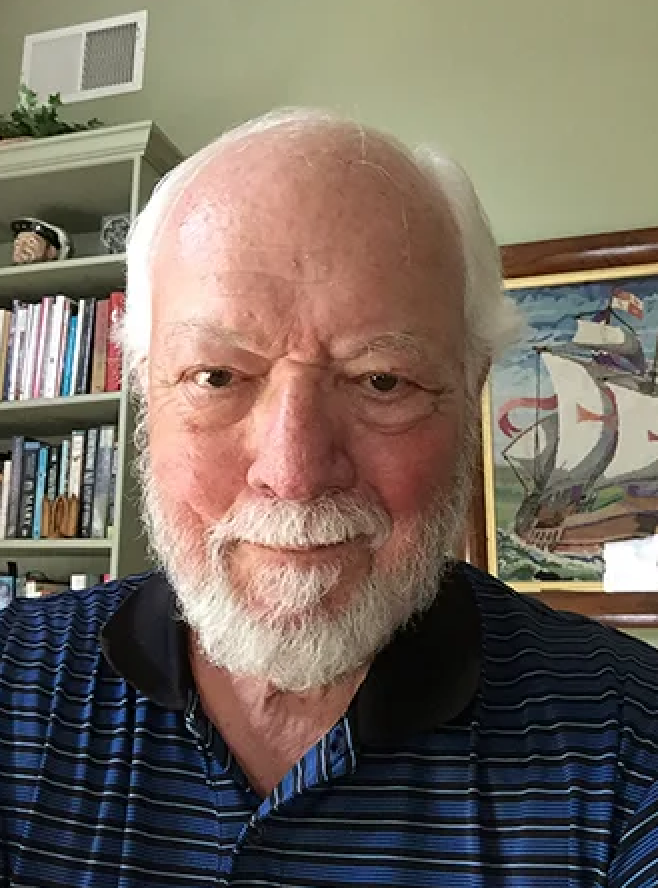
Rev. Dr. Charles Smith D.D.
The Reverend Dr. Charles Michael Smith, of Greenville, N.C., retired in 2008 as Executive Director of Connectional Ministries for the North Carolina Conference of The United Methodist Church after more than 40 years of pastoral leadership, including service as the pastor of six congregations and twice as a District Superintendent. He chaired the Personnel Committee of the North Carolina Council of Churches off and on for nearly three decades and received its Distinguished Service Award in 2011.
Join us in continuing this legacy of justice and courage. Your gift supports the Council’s work for equity and compassion across North Carolina. Donate today.
