

When the time comes that the distinguished public servants who control North Carolina’s General Assembly aren’t rummaging in their bag of tricks for even more ways to tilt election laws in their favor, then we can expect the sun to rise in the west and pigs to take wing.
So it’s no surprise that the Republicans who hope to retain their narrow legislative majorities in November look to House Bill 958 as their latest showpiece of election tinkering. The bill was approved by the state House on June 30, strictly along party lines, and now awaits its fate in the Senate.
It’s true that protests by voting rights advocates helped persuade the House to soften some of the measure’s harsher provisions. And on balance the bill doesn’t rank with some earlier whoppers of voter suppression. Some lowlights: It would give new election oversight powers to the state auditor, now a Republican; make it easier to challenge voters over their credentials; and require photo identification to be submitted by voters living abroad, including members of the military.
Still, the overall picture is of 37 pages of solutions in search of any legitimate problems – at least, problems beyond voting being too easy for likely Democrats.
North Carolina’s Republican leaders would rather drink muddy water and sleep in a hollow log (apologies to Jimmie Rodgers) than push back against President Trump’s wild claims about Democratic cheating at the polls – which he of course continues to cite, without evidence, as having led to his 2020 defeat by Joe Biden.
And with his popularity tanking amid a misbegotten war with Iran, plus multiple economic woes and other insults to the nation’s well-being, Trump doubles down on his “election integrity” agenda in hopes of staving off a resurgence by Democrats bent on holding him to account.
Save us!
Trump’s effort is centered on the hyper-partisan SAVE Act (the acronym stands for Safeguard American Voter Eligibility, although “Suppress” would be closer to the mark). Not only would the legislation skew the electorate in Republicans’ favor. It also would have the effect of overriding a key principle of our system – that states have a legitimate role in setting the “times, places and manner” of federal elections.
Yes, according to the Constitution, those state laws can be superseded by Congress and of course must comply with the Constitution itself. But the premise is that when it comes to elections in which U.S. senators and representatives are chosen, there’s no need for a one-size-fits-all set of rules. That flexibility is what allows states such as Oregon to adopt voting by mail as its standard method while others have tight restrictions on absentee ballots.
Practically speaking, with the SAVE Act in effect and if states wanted to retain their own rules for non-federal contests, they’d need to maintain two sets of voter rolls, produce two sets of ballots and have a two-track counting system. So the process would be more complicated and more expensive. There would be pressure to make all election rules conform to the federal standard, with unfortunate consequences for citizens’ access to the ballot box.
If mail-in voting or other voter-friendly methods were resulting in significant fraud, of course the system would have to be tightened or scrapped. But experience has shown that the only “problem” with well-conducted voting by mail is that it makes voting more convenient.
The latest version of the SAVE Act was approved by the U.S. House in February. It is now before the Senate, with Trump demanding action amid a flurry of threats. A key provision would require anyone registering to vote in federal elections, or changing their registration, to show proof of U.S. citizenship.
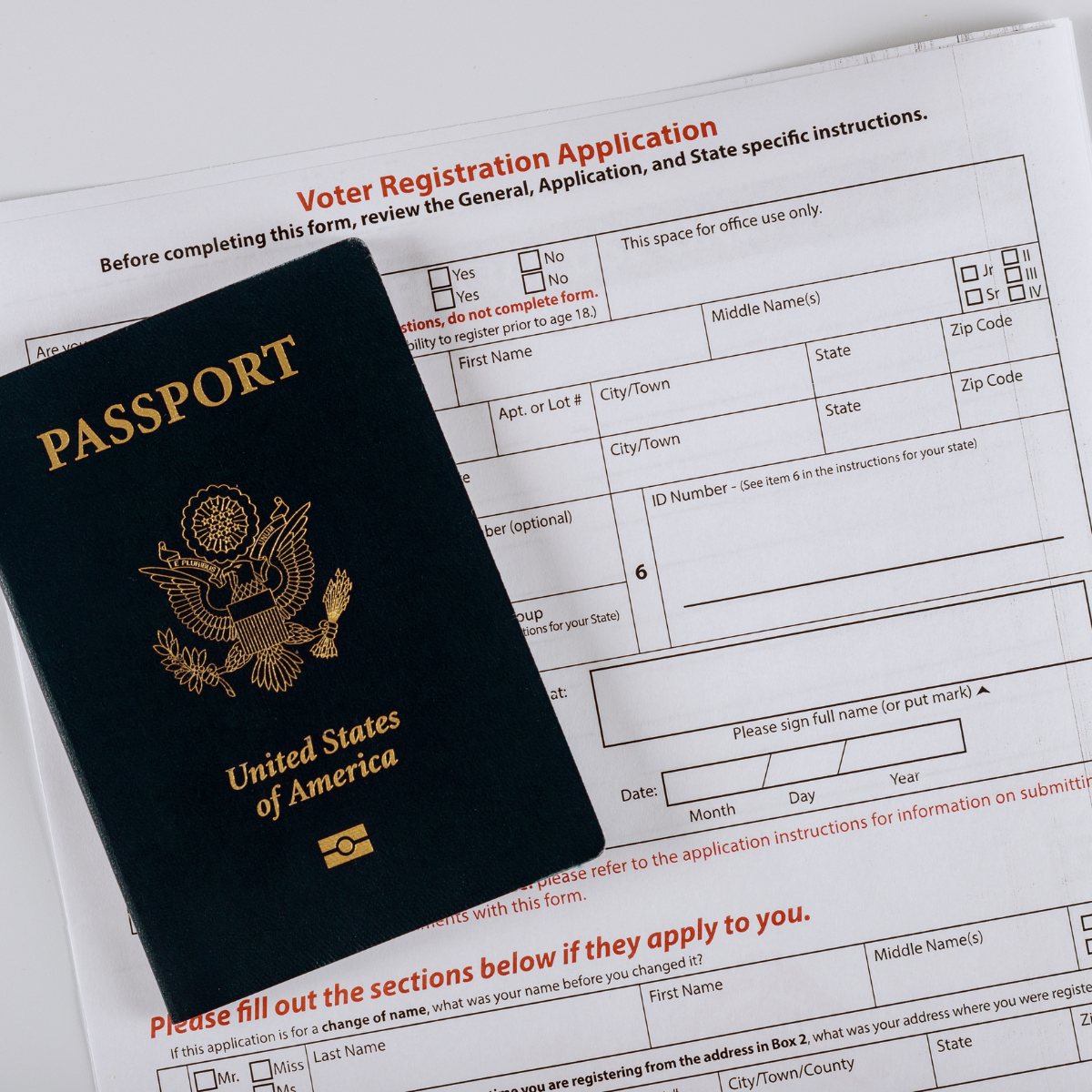
As a practical matter that proof would likely be a passport or a legal birth certificate – documents that millions of Americans whose citizenship is irrefutable don’t possess. To obtain them, they would incur the cost and hassle of a passport application or have to cut through tangles of red tape at the vital records office.
The burden naturally would fall most heavily on people on lower rungs of the economic ladder. The same applies to the bill’s requirement that voters show photo identification. Heavens – many of them might favor Democratic candidates!
‘Let me see your papers’
The imaginary bogeyman that Trump has seized upon as his go-to election fraud scenario is that voter rolls nationwide are replete with non-citizens. That’s despite vanishingly little evidence that meaningful numbers of such people are defying felony laws and managing to get registered.
In North Carolina, for instance, prospective registrants must declare, truthfully, that they are indeed citizens. And they must provide identifying information, typically a driver’s license or partial Social Security number. (Non-citizens with federal work permits may hold Social Security accounts but would be taking a huge risk if they lied about their citizenship status.)
A North Carolina resident who wants to register to vote, or to update his or her registration, now has options – online, by mail, in person. The SAVE Act would require such business to be carried out at an election office or polling place.
One upshot would be to throw traditional voter-registration efforts, conducted on doorsteps and sidewalks, perhaps in church fellowship halls, for a loop. So how would that comport with the notion that in a democracy, the more of us who speak up at the polls, the more credible our government becomes in reflecting the general public’s views rather than the views of special interests?
Trump highlighted his fixation on the SAVE Act in June with his last-minute decision – with the stage set at the Capitol and guests beginning to take their seats – not to sign a bipartisan housing bill ballyhooed by his own staff unless the election bill first were passed. The housing measure, aimed at easing the nation’s housing crunch, became law anyway as of July 11 when he declined either to sign or veto it within the allotted 10 days.
The administration then ramped up its bullying by threatening to cut back on federal anti-terrorism and election-security grants. It focused on a program that hands out some $1 billion a year, saying that states would have to switch to paper ballots and enforce stricter anti-fraud measures or lose up to 20 percent of their funding. That looks like endangering public safety to further Trump’s goal of warping election rules to his benefit.
A notable dissident in the midst of all this has been North Carolina’s senior U.S. senator, Republican Thom Tillis, who has sparred with the White House since deciding not to run for re-election this fall.
With less than four months until Election Day, there’s not enough time to make the SAVE Act’s wholesale changes to election laws, Tillis asserted. And because the bill is subject to a Senate filibuster, it would need at least 60 votes for approval in that chamber.
“Unless they do the work to get to the 60 votes, they know it’s dead, and so all this is theater,” Tillis told The News & Observer of Raleigh. “Let’s assume you only allow early voting in the month of October,” he added. “Then do you honestly believe that we can have this thing up in 50 states? There’s no funding. There’s no specific implementation instructions …” Naturally, Trump insists that Republican Senate leaders scrap the filibuster – not a favor they’re eager to do.
It’s not a confidence-builder for election fairness advocates that while the SAVE Act hangs in the balance, the U.S. Supreme Court says it’s now OK for political parties to spend whatever they want in coordination with federal candidates’ campaigns – enhancing the clout of wealthy influencers. And meanwhile, the court now holds that racially discriminatory redistricting plans can’t be challenged on the basis of their effect, only on whether the discrimination was intended – a much higher bar.
Back at the Raleigh ranch, the state Senate recessed until July 27 with H.B. 958 still pending. That gives top legislators plenty of leeway to bargain on behalf of measures that might help them in their fall campaigns.
They might also heed the cautionary words of Tillis – a former state House speaker – when it comes to passing new voting rules while an election looms. Chaos in the machinery of democracy might serve the interests of partisans and budding autocrats. But it never well-serves the people.
