Nice to Meet You
Nice to Meet You
As I move forward in trying to clarify my calling here, I welcome the input of friends of the Council. Peace is a big job description. What does it mean to you?
By David LaMotte, Consultant for Peace
by David LaMotte, Consultant for Peace
As I move forward in trying to clarify my calling here, I welcome the input of friends of the Council. Peace is a big job description. What does it mean to you?
By chris
by chris

Over the past year, we’ve been hosting clergy breakfast events on immigration across the state. We’ve met with over 450 faith leaders to talk about how congregations and people of faith can get involved to make our state a better place for our immigrant brothers and sisters. Our work has even drawn the attention of major media outlets. One was highlighted by a local TV station, and more recently we had not just one but two reporters from the Raleigh News & Observer sit in with us at the July 1 breakfast at Fairmont UMC in Raleigh.
By George Reed, Former Executive Director
by George Reed, Former Executive Director

Last week’s march and rally to halt re-segregation in Wake County was a powerful experience. Thanks to all of the Council folks who turned out. I saw several current leaders of Council member bodies (Bishop Richard Thompson, Bishop George Walker, Bishop Al Gwinn, Bishop Michael Curry, President Greg Moss, Pastor Nancy Petty), one retired bishop […]
By chris
by chris
By chris
by chris

Join the NC Council of Churches and local filmmaker Charles Thompson for an extraordinary evening in Greenville as we premiere the new film Brother Towns / Pueblos Hermanos.
Date: Thursday, November 4, 2010By chris
by chris

Join the NC Council of Churches and local filmmaker Charles Thompson for an extraordinary evening in Asheville as we premiere the new film Brother Towns / Pueblos Hermanos.
Date: Thursday, November 11, 2010By chris
by chris

Join the NC Council of Churches and local filmmaker Charles Thompson for an extraordinary evening in Chapel Hill as we premiere the new film Brother Towns / Pueblos Hermanos.
Date: Friday, October 15, 2010By chris
Qué Pasa Media Network
The Methodists appear to be one step ahead of other religious congregations in North Carolina when it comes to the work of promoting immigration reform. One of the denomination’s main statewide leaders, Bishop Al Gwinn, was one of the keynote speakers at a breakfast this past Thursday organized by the North Carolina Council of Churches in Raleigh.By chris
Qué Pasa Media Network
Su principal líder a nivel estatal, el obispo Al Gwinn, fue uno de los principales oradores en el desayuno que organizó el Concilio de Iglesias de Carolina del Norte en Raleigh, el pasado jueves. El clérigo destacó las iniciativas y esfuerzos que realizan distintas agrupaciones de su denominación religiosa, pero aclaró que todavía falta seguir educando a más metodistas estadounidenses sobre un tema tan controversial.By Willona Stallings, Former Program Coordinator – Partners in Health & Wholeness
Greensboro News & Record
According to Trust for America’s Health, as reported in the News & Record on June 29, North Carolina is now the 10th-heaviest state, after ranking No. 12 just one year ago. This signifies a reduced quality of life for more North Carolinians, as research shows that persons who are overweight or obese are at increased risk for heart disease and stroke, Type 2 diabetes and certain cancers. It also means additional financial costs for our state.By chris
by chris
By chris
by chris
By chris
by chris
By chris
Raleigh News & Observer
The young women who went on a hunger strike in downtown Raleigh should be commended for their courage. They only want the chance to go to college and earn legal status in this country in order to contribute fully to society.By Aleta Payne, Former Deputy Executive Director
by Aleta Payne, Former Deputy Executive Director
The Council’s redesigned website is up and running with easier navigation, more modern functions, and a cleaner, crisper look. We have been discussing the new site internally for months, and the result is a big step forward for us.
By chris
Asheville Citizen-Times
The title on David Lamotte’s business card sounds a little audacious: “peace associate.” But that’s Lamotte’s job with the North Carolina Council of Churches, and he’s serious about the work. Lamotte just spent two years living abroad and studying rigorously to earn a master’s degree in international relations and peace and conflict resolution. Now the former singer-songwriter who was once a fixture on the local music scene is ready to apply what he’s learned.By chris
by chris
What: Critical Issues Conference 2010: Climate Change & Faith
When: October 14
Where: Congregational UCC (400 W. Radiance Dr., Greensboro)
Why: Come learn about climate change and how congregations can make a difference.
By chris
by chris
By chris
by chris
The debate about immigration policy continues to divide people of good will across our nation and our state. Immigration divides us, in part, because of both the breadth and the depth of the issues involved – from powerful global economics to fast-changing local cultures, from the complex world of international politics to family histories intricately woven across borders, from worldwide patterns of migration to the very heart of American identity.
The question of how to respond to the complicated realities of immigration has divided us not only as Americans, but also as people of faith. What do our faith traditions have to say about immigrants and foreigners?
By chris
by chris
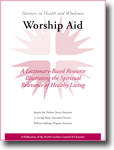
Welcome to our worship resources for Partners in Health and Wholeness (PHW). PHW is an ambitious program of the North Carolina Council of Churches designed to help people of faith to see health — their own health — as an issue of faith and to take action that will lead to healthier and more abundant living.
By chris
by chris

During the spiritual journey that is the life of a Christian, each one of you involved in this study has come to the conclusion that part of being a follower of Christ is paying attention to the housing needs of all of God’s children. Some of you may be more aware of the problem of inadequate housing in your part of North Carolina than are the people who developed this study. Others of you had your interest peaked simply by the hands-on nature of FaithWorks, the rural home-building project of Habitat for Humanity and the North Carolina Council of Churches. Wherever you come into this study, you will find in its pages and in the discussions that result a biblical witness to the problem of inadequate housing.
By chris
by chris
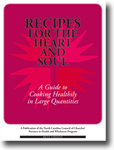
At the North Carolina Council of Churches’ Partners in Health and Wholeness Program, we want to help people of faith and congregations become healthier. What better way to help people become healthier than by helping them prepare healthy foods? Not only do we want to show you how to cook healthy foods at home, we want to offer you recipes to use at church events, too. Our objective with this cookbook is to highlight healthy recipes for large groups. Our hope is that you will use these recipes to help feed your parishes, that they might receive spiritual and bodily nourishment at church.
By chris
by chris

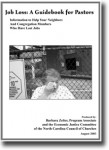
This booklet is an offering to you from the North Carolina Council of Churches. When the Executive Board of the Council met in the Fall of 2002 to determine priorities for the Council’s program work, a prime concern was our North Carolina economy.
We are one of the top states for job loss due to the free trade agreements initiated by the federal government over the past ten years. The earnings gap between those in stable professions and those who serve in jobs such as health aides and childcare workers, farm workers and landscapers, is widening every year. Add to this a recession and wars, tobacco’s demise, flood and hurricane destruction, and a state budget crisis, and we end up with too many individuals and families in stress and fear and pain due to economic hardship.
By chris
by chris
By chris
by chris

In light of concerns about public school resegregation in counties across the state, the North Carolina Council of Churches has begun work to counter this backward step toward increased racial and economic separation. Issues of resegregation have surfaced in the state’s largest school districts, Wake and Charlotte-Mecklenburg counties, as well Wayne and New Hanover counties and elsewhere.
By chris
by chris
Some 2009 donors chose to give to the North Carolina Council of Churches in honor or in memory of someone. We are grateful for those gifts which help sustain our work for social justice and Christian unity.
By chris
by chris
These congregations have demonstrated that, as people of faith, they strive to live an abundant life of health and wholeness by naming a congregational health promoter, serving healthy food and beverage at church meals, and reducing the impact of smoking on themselves and their neighbors.
By chris
Raleigh News & Observer
The Rev. William Barber, president of the state NAACP, has organized a wide range of church groups that have historically been involved in civil rights and social justice issues to oppose the move to neighborhood schools in Wake County. Using language heavy with religious overtones and accompanied by a comparison between ending the diversity policy and the old Jim Crow segregation laws, speakers at a news conference Tuesday at the state Capitol argued that they had the moral high ground in the fight.By chris
by chris

Unfortunately, the childhood obesity epidemic is drastically affecting North Carolina. In 2009, North Carolina ranked 14th worst in the nation in childhood overweight and obesity for children ages 10-17, with more than one-third (33.5%) of our children being overweight or obese.
Also in this Raleigh Report: Domestic Violence, Environment, Gambling, Health, Housing, People with Disabilities, Public Education, and more.
By chris
by chris
Let’s get one thing straight: there is no worthwhile distinction to be made between video poker, currently banned in North Carolina with one notable exception, and the electronic “sweepstakes” game parlors sweeping the state.
By chris
by chris

Dr. H. Stephen Shoemaker, Myers Park Baptist Church
This man is scary. To others, probably also to himself. He lived among the tombs. There was no place else to live. He wore no clothes, the text says, and had no home. Does that mean no family too? The diagnosis of the time: He was possessed by demons. We guess today a psychological disorder, but let’s not be armchair psychiatrists, two thousand years away.By chris
by chris

Long-time members of the Raleigh Report network will grieve with me the passing this week of Bertha “B.” Holt. From 1975 to 1994, B. represented Alamance County in the state House of Representatives. The Council recognized her service by presenting her with our Faith Active in Public Life Award in 1987, the second year it was given.
By chris
by chris
Here’s a quick update on the state budget process: the Senate passed its version of the budget on May 20, eight days after the summer session convened. The House finished its version on June 4. A Conference Committee is now putting together the final budget.
By chris
Raleigh News & Observer
When hurricanes or earthquakes hit, religious congregations know how to respond with acts of good will and charity. But what about an oil spill?Many Triangle congregations are finding their voice.
Tonight two churches will hold vigils to pray and reflect on the BP oil rig disaster. On Sunday, the two-month anniversary of the oil spill, many Christians will attempt a daylong fast from oil in whatever way they find appropriate.
By chris
by chris

Rev. Nancy Petty, Pullen Memorial Baptist Church (Raleigh)
It’s an image I can’t get out of my mind: a rescuer washing goo off a pelican. The bird was found alive but coated in the oil slick making its way ashore along the Louisiana coastline. The rescuer, volunteering hours of her time, was gently and compassionately bathing the bird in hopes of giving it another chance in the wild. It is a sad but hopeful image from the Gulf of Mexico. And of all the images I have seen from this, the worst oil spill disaster our country has ever experienced, it is this one that causes me to reach for the remote as fast as I can to change the channel.By chris
Charlotte Observer
State clergy will meet in Charlotte tomorrow to discuss the theological and practical sides of the immigration debate. Seeking to encourage constructive dialogue, clergy members are expected to discuss the controversial Arizona immigration law and how they relate with local enforcement efforts such as Mecklenburg County’s 287g program.By chris
Wilmington Star-News
How do you fix lunch for a hundred or so fellow worshipers at your hometown church – and still keep the dishes low in calories, salt and cholesterol? The N.C. Council of Churches might have the answer to your problem.By chris

NC Policy Watch
In the 21st Century, we must no longer view Church as a semiweekly activity that occurs within the confines of a physical structure with four walls and a pulpit. Instead, we must take our message of hope, justice, unity and peace to the wider community, and, yes, even Capitol Hill! I believe that real change happens when various groups – public and private, secular and religious, progressive and conservative, privileged and disadvantaged, old and young, black and white – work together to achieve a common goal.
By chris
Raleigh News & Observer
By the time H. Shelton Smith was hired to teach at Duke University in 1931, the movement to unite Christians of different denominations was under way in New York and other places.But four years later when Smith founded the N.C. Council of Churches, the idea that Christians of various stripes could work together, especially in overcoming racial segregation, was still largely unheard of in the South.
Today, the N.C. Council of Churches is marking 75 years of activism on a broad range of issues, including racial equality, women’s empowerment, children’s health care, prison reform, farmworker rights and environmental conservation.
By chris
by chris
The summer’s “short session” of the North Carolina General Assembly convened on May 12, a continuation of the 2009 session. Its primary task will be to adjust the 2010-11 budget adopted last year, though it can also take up bills that made it through one house last year, bills coming from study commissions, and bills amending the state Constitution.
By chris
by chris

In his life and mission, Jesus saw himself as actively preparing and serving the kingdom of God on earth, to
be as it is in heaven. He saw all of his disciples in the same light and as having the same purpose. Nowhere
in the prayer instructions of Jesus is the focus on getting the earth–or ourselves–to heaven. The heart of
the Lord’s Prayer is a request for heaven on earth. While this difference may seem subtle, its truth is at the very center of the call and practice of prayer and discipleship.
By chris
Greensboro News & Record
The church is hosting a statewide clergy breakfast on immigration Thursday, the latest in a series of meetings sponsored by the N.C. Council of Churches.The issue is a complicated one, Beverly says, but like a lot of people of faith, she is calling on elected leaders to work on an immigration process that unifies families, protects workers’ rights, and provides a clear pathway to citizenship.
The interfaith breakfast discussion, “From Hostility to Hospitality: Immigration and People of Faith,” examines both the theological and practical sides of the debate.
By chris
Associated Press
The North Carolina Council of Churches celebrates Tuesday with an evening of events at the Duke University Divinity School. The council has been a voice for social justice in North Carolina since it was formed in 1935.By chris
by chris

Rev. Jonah Kendall, St. Philip’s Episcopal Church (Durham)
Where are we with this? Have we ever used our faith to challenge and disrupt? For on this Ascension Sunday when we’ve been called by Christ to proclaim a message of repentance and the forgiveness of sins, that is God’s love for all, when we have heard in Acts about Paul and Silas, about how the proclamation of this love can lead to imprisonment, we’re invited to ask ourselves how our lives show forth Christ’s Gospel, a Gospel that precisely because it proclaims a love and well-being for all is radical and disruptive.By chris
Raleigh News & Observer
As you reported recently, Raleigh Police Chief Harry Dolan opposes the new Arizona law targeting immigrants because it undermines public safety. The N.C. Council of Churches agrees with Dolan and other law enforcement agencies that such draconian measures are both impractical and immoral.This law allows any person to be stopped by police if there is reasonable suspicion of being undocumented. Encouraging these fearful sentiments is wrong. It sends us backward as a nation in a time when we need real solutions to move us forward.
By chris
Eastern Wake News
RALEIGH – As people of faith, we are greatly disturbed by reports of local law enforcement targeting Spanish-language church services in their misguided hunt for undocumented immigrants in Zebulon. All people – regardless of their immigration status – have the right to worship free from harassment and unconstitutional checkpoints. Just because someone doesn’t have the right papers for the U.S. government does not make him or her any less a child of God. It’s shameful that a country so proud of its religious freedom would unfairly target church-going members of the community.By chris

Greensboro News & Record
For 75 years the N.C. Council of Churches has offered a faith voice for progressive social justice and Christian unity in North Carolina. Founded by a group of white church leaders who were opposed to segregation and wanted to speak with a unified voice on issues, the council has continued its work for racial justice, but has expanded to include other areas at the forefront of social advocacy.By chris
by chris

A Litany of Lament Over a Despoiled Ocean
Ken Sehested, pastor, Alliance-affiliated
Circle of Mercy, Asheville, N.C.
In the beginning, darkness covered the face of the deep.
Then the Breath of Heaven swept across the waters, blessing the sea with all manner of creatures.
The sea knows its Maker and roars its applause; the fish therein leap at the sound of God’s voice.
Through the baptismal waters of the Red Sea did the Israelites escape their tormentors and emerge to freedom’s demand.
By chris
Raleigh News & Observer
The N.C. Council of Churches is among the sponsors of the conference, which will begin with an interfaith meditation led by Rabbi Raachel Jurovics of Raleigh and will include the participation ofAbdullah Antepli, the Muslim chaplain at Duke.“The idea that we would deface the divine figure is repugnant in all our traditions,” said Jurovics. Judaism, Christianity and Islam consider human beings to be made in God’s image.
By chris
Raleigh News & Observer
As followers of Jesus Christ, a healer known as the Great Physician, as believers in a God who loves and cares for all of his children equally, we at the N.C. Council of Churches are profoundly grateful for passage of health care reform legislation by the U.S. House of Representatives.By North Carolina Council of Churches
by North Carolina Council of Churches
God gives people plants and seeds for farming as a gift in the first chapter of Genesis. Genesis tells us God created plants and their seeds, “each according to its kind,” called them good, and gave to humans to eat. For generations, farmers and gardeners have honored this gift, tending and improving their crops.
We, the members of the Rural Life Committee of the North Carolina Council of Churches, celebrate God’s gift of agricultural diversity and the good stewardship of that gift by generations of farmers. We support just and fair options for farmers and a secure food supply for those in need. We recognize that our actions affect people across the globe.
When addressing the concentration of ownership in agriculture and the development of genetically modified seeds, we consider: Who benefits? What are those benefits? What are the true costs? Who will pay them? Are there more sustainable, appropriate, cost-effective and just alternatives?
By chris
Durham Herald-Sun
Opinion: Many of the noisy detractors who rail against universal access to affordable health care are the same folks who loudly proclaim a pious faith and claim ethical superiority on other issues. Maybe they should listen to other religious voices on faith and ethics, voices of those who spend their lives studying the scriptures and serving people seriously impacted by our current health-care system.By chris
Wilmington Star-News
The Faith and Health Summit is March 23 in Raleigh to bring health care providers and faith leaders together to work toward health care reform or just to understand each other a little better.You know, that whole conflict between religion and science? This summit also addresses those big questions in an effort to make North Carolina congregations healthier.
Governor Beverly Perdue is the main speaker at the Summit’s luncheon, and the Rev. Dr. Gary Gunderson of Methodist Healthcare in Memphis, TN will give the keynote address. Churches can check out a series of workshops on mental health, church-sponsored community gardens, health disparities, faith-based emergency preparedness and congregational health.
By chris
NC Policy Watch
So, what would comprehensive immigration reform mean for us? Imagine having a system that reflected both the realities of a global economy and our best values. Families would be stronger, enforcement would be more effective, workers would be better paid and protected, and American workers would not face discrimination from unscrupulous employers.By chris
Wilmington Star-News
Last week, the council sent an email to all the churches on its New Han over County database titled “Opposing re-segregation in the schools,” that encouraged church leaders to sign petitions being circulated against middle school redistricting. The organization isn’t formally planning an event in the area, said executive director George Reed. The Council is a Raleigh-based group that organizes churches in the state around social justice issues.By chris
by chris
By chris
by chris

Rabbi Leah R. Berkowitz, Judea Reform Congregation (Durham)
This past week, we read the first section of the book of Exodus, the story of our formation as a people. At the end of Genesis, we learned that we came to the land of Egypt on the brink of starvation. Egypt was a land of opportunity, with its storehouses of grain and its fertile soil for grazing.The early Israelites settled in the region of Goshen, and flourished there. Joseph, who had emigrated earlier, worked his way up to a position of power and influence. He lived amongst the Egyptians and even saved them from impending famine with his wisdom, foresight and organizational skills.
By chris
by chris
This Prayer for Unity and monthly prayer calendar include by name the judicatories and congregations that are members of the North Carolina Council of Churches and the names of their current leaders. Your prayers for reconciliation are invited for all Christian bodies in and beyond the state.
By chris
by chris

Rev. Dr. Jill Crainshaw, Wake Forest Divinity School (Winston-Salem)
We were an eclectic bunch—divinity school professor, mother of children with special needs, teacher of teenagers, woman who battles Lupus, man who is legally blind, and teacher who has a rare type of epilepsy. All of the students but one are enrolled in, or have graduated from, our Masters of Divinity degree program. Each week of Summer Session II, we discussed a book about ministry, theology, and disabilities.By North Carolina Council of Churches
by North Carolina Council of Churches
Like the patriarch Noah, humanity stands responsible for ensuring that all nature continues to thrive as God intended. Men and women are charged with preserving the beauty, diversity and integrity of nature as well as fostering productivity. Stewardship requires careful protection of the environment and calls us to use our intelligence to discover earth’s productive potential. We believe that stewardship of God’s creation is a moral responsibility that affects the lives of all, especially the poor and vulnerable. As people of faith, as individuals, as institutions, as a nation, we must commit ourselves to preserving and protecting the planet for generations to come.
By chris
by chris

Rev. Peter JB Carman, Binkley Baptist Church (Chapel Hill)
When the Apostle Paul wrote to the church in Galatia about baptism, it seems he had a whole lot more than water on his mind. He was writing to a church divided right from the very beginning. While he was welcoming in the non Jewish pagans, others weren’t so sure. While he was trying to help negotiate the beginnings of a multi-cultural Christian faith, others were, even from the very beginning, more comfortable with those who were their own people. Jews had every reason to be suspicious of Romans—after all they had suffered under the hand of their occupation governments for many years.By chris
by chris

Rev. Deborah Patterson
Babylonian captivity. I believe we are there again, both literally and figuratively. We are literally in Babylon as American troops serve in an unending war in Iraq, the new name for that land. And, working with parish nurses, daily I hear stories which attest that we are figuratively being held captive by a health system that excludes millions, bankrupts millions, and keeps millions in jobs they despise but need for health insurance. Doctors are held captive by reimbursement plans that penalize them for spending more than 7 or 8 minutes with patients. Nurses are held captive by staffing patterns that keep them working longer shifts, with more and sicker and patients to care for. Churches are being held captive by health insurance costs that prevent them from being able to call full-time pastors.By chris
by chris

Ellen Davis, Duke Divinity School (Durham)
Reading the Bible is my line of work, yet for years I read past the first chapter’s detailed attention to the food supply, as have my fellow biblical scholars. I now realize that my profession’s obliviousness about food in the Bible points to a deep and worrisome difference between a modern cultural mindset and the culture that all the biblical writers represent. The difference comes down to this: for them, eating and agriculture have to do with God, and for us they do not.By chris
Raleigh News & Observer
Many politicians are saying that they want to address the root causes of our immigration situation, but they go on to talk only about increased enforcement. Of course, we are a nation of laws and the rule of law should be upheld. But experience and common sense show us that merely building a bigger wall won’t work because enforcement alone does not deal with the root causes.By chris
by chris

Rev. Mel Williams, Watts Street Baptist Church (Durham)
William Blake was a poet who understood the meaning of mercy—the unearned, undeserved gift of God’s grace. Mercy is the character of God; mercy is God’s very self-understanding. When we beg for mercy, or forgiveness, we are reaching for God, for God is mercy. This is the character of God, stated throughout the Old Testament: “The Lord is merciful and gracious, slow to anger, and abounding in steadfast love.By chris
by chris

Rev. Dr. Sam Wells, Duke University Chapel (Durham)
These are the kinds of images that come into our minds when we hear the word peace. Such a diverse range of uses makes the word peace seem either vague and idealistic or cynical and manipulative. The New Testament is neither vague nor idealistic nor cynical nor manipulative. It has two words for peace. One of those words is Jesus. Ephesians chapter 2 gives us perhaps the most concise description of the way Jesus is peace. Here are the five ways that Jesus is peace. All of them center on the word “one.”By chris
by chris

Ginny Tobiassen, Wake Forest University Baptist Medical Center (Winston-Salem)
“Now, there was a woman.” Right away, these few words tell us that today’s gospel story is going to be about someone among society’s second class—or lower. Women in first-century Jewish society were of subordinate status. So it is clear from the start that we are looking here at a story about someone already somewhat marginalized simply by being born female. We might say: “Now, there was a woman: Strike one.”By chris
by chris

Rev. Cliff Frasier, First Congregational Church, UCC (Washington, D.C.)
In the policy-making reform-world, we may talk about health care as a “right.” In the economic world we may talk about health care as a cost or even as a profit. [“p-r-o-f-i-t]. In the health-care-delivery world, the social-work-world, we may talk about health care as a need. But in our faith world, let us also talk about health care as a responsibility. As a moral responsibility. To care for God’s creation — for ourselves, for each other. Let us talk about not-providing-health-care as a failure in the realm of moral-responsibility. In other words, to the degree we allow within moral reasoning the category of . . . . “sin” . . . let us allow the failure to provide healthcare to be understood in just that way.By chris
by chris

Rev. Nancy Petty, Pullen Memorial Baptist Church (Raleigh)
While in Oxford I attended a worship service in which the bishop began his sermon with the words, “Most of you know that I usually don’t stick to the scripture when I preach. However, today will be different.” Immediately, he had my attention. I thought, “Is that an option, to not stick to the scripture?” At least in my mind-and I am aware that you might have a different opinion-I always try to stick to the scripture. I do so, mainly, because I love exploring the stories of our faith, but also because I think that is what I am supposed to do. But now this bishop had given me something new to think about.By chris
by chris

Rev. Dr. Christopher C. F. Chapman, Knollwood Baptist Church (Winston-Salem)
For we can believe all kinds of things about God and have all the right positions on ethical issues, whatever those are, but if we don’t have love, who wants to be part of the church? We can have great ministries for all ages, the best staff, the most up-to-date programs with all the whistles and bells, but if the people of the church don’t genuinely love each other, who cares? We can have the best maintained buildings and grounds, the latest equipment and technologies, the perfect organizational structure and communications systems, but if we don’t want to be with each other, the buildings will eventually be empty. We can even claim to have a passion for missions, want to share God’s love with people around the globe, but if we do not love for the person sitting next to us, our passion will be all fire and no warmth.By chris
Dr. H. Stephen Shoemaker, Myers Park Baptist Church
For the love of Christ controls us, lays claim to us, compels us, grasps us at our deepest being. This is the heart of Christianity for Paul: the love of Christ permeating and shaping our lives, sweeping through us as breath carrying oxygen to every cell in the body. Paul’s words in this passage are more than prose; they are incantation.by chris

Dr. H. Stephen Shoemaker, Myers Park Baptist Church
For the love of Christ controls us, lays claim to us, compels us, grasps us at our deepest being. This is the heart of Christianity for Paul: the love of Christ permeating and shaping our lives, sweeping through us as breath carrying oxygen to every cell in the body. Paul’s words in this passage are more than prose; they are incantation.By chris
by chris

Rev. David T. Hill, First Church (Oberlin, Ohio)
We’ve heard the stories of those who take great personal risk to cross the desert at night in order to seek out a better life for themselves and their families – entrusting themselves to “hired hands.” “Hired hands” all too ready to exploit the most vulnerable, abandoning their charges in the desert, raping and abusing women and children. Even those who make it safely into this country must keep ever vigilant against the “hired hands” – our “hired hands,” supported by the taxes we pay, who are on the lookout for the stranger, the alien, the undocumented or improperly documented person, eager to return them back across the border or perhaps worse, to prison.By chris
by chris

Rev. Amy Jacks Dean, Park Road Baptist Church
Matthew, Mark, and Luke all tell this same basic story of the healing of this blind beggar, but Mark is the only one to give the man a name – Blind Bartimaeus is how we know him. Jesus is headed to Jerusalem from Capernaum – and all along the way he is talking and teaching and answering questions and listening in on the disciples’ conversations with each other. You know how bad there were to get off track and try to figure out who was the favorite.By chris
by chris

Rev. Steven Shoemaker, Myers Park Baptist Church (Charlotte)
What would I want to say to my son or daughter on Earth Sunday? I would begin by saying that the form of Christianity that bequeathed to me so much grace, truth and faith failed me in my relationship with God’s creation. We were so fixed on saving souls that it was as if the physical world around me were an afterthought of God and therefore an afterthought of Christian concern.By chris
by chris

Dr. H. Stephen Shoemaker, Myers Park Baptist Church
Two weeks ago I spoke of Jesus the Friend. Today, I want to explore Jesus the Stranger, Jesus as “other,” different, even as “enemy” because sometimes we perceive him as enemy. I was told as a young minister not to get too far ahead of my congregation because they might mistake me for their enemy. Sometimes we mistake Jesus as our enemy. It may seem strange to describe Jesus as Stranger. But this may be the only way to make sure we see him as he is, not as who we want him to be. This is the only way we truly know another, that is, as they are, not our projection of what we wish them to be.By chris
by chris
By North Carolina Council of Churches
by North Carolina Council of Churches
In the wake of failed attempts by Congress to pass comprehensive immigration reform, states and localities have increased their own efforts to enforce current immigration laws and, in some cases, to implement new programs designed to reduce immigration. In North Carolina, these recent efforts have created a more hostile environment toward immigrants. Many immigrants – both documented and undocumented – today live in fear of arrest and possible deportation. Even though recent studies have shown that crime rates among immigrants are significantly lower than those among U.S. citizens, enforcement-only anti-immigrant measures are increasing across the state. These steps continue to generate fear within immigrant communities and hostility towards immigrants in non-immigrant communities.
By North Carolina Council of Churches
by North Carolina Council of Churches
The North Carolina Council of Churches unequivocally affirms the essential, inherent, and universal dignity of all persons, for “God created humankind in his image, in the image of God he created them.” This means that the value of any and every individual – all equally cherished by the Author of Life – must not under any circumstances be compromised, diminished, or infringed upon. At all times and in all way, the Council seeks to protect and promote the dignity and flourishing of the human person.
By chris
by chris

Rev. Ismael Ruiz Millan, Brookland-Brooksdale United Methodist Church (Roxboro)
A bitter debate has taken place in recent years regarding immigration—especially illegal immigration. There are many views in this debate. Some think these “illegal immigrants” do not deserve mercy at all and have even tagged them as “the undeserving.” For instance, in North Carolina, young children whose parents brought them to this country illegally do not have access to higher education. Even though these children did not ask to come to this country, North Carolina law has resolved that they do not deserve to go farther academically because they are “illegal.” On the other hand, others think these “illegal immigrants” deserve mercy.By chris
by chris

The Rev. M. Jonah Kendall, St. Philip’s Episcopal Church (Durham)
I want to come straight at you today. I want to be clear, and I want to be concise. I’m not going to open with an illustration but rather get straight to the point. And this is because our lesson from Genesis, with Noah’s ark – along with Jesus’ words in Matthew’s gospel about the house that could withstand the wind and rain – we are confronted with what I’d call the perfect storm.By chris
by chris
In the United States, Mother’s Day was originally suggested by poet and abolitionist activist Julia Ward Howe. In 1870, after witnessing the carnage of the American Civil War and the start of the Franco-Prussian War, she wrote the original Mother’s Day Proclamation calling upon the women of the world to unite for peace. This “Mother’s Day Proclamation” would plant the seed for what would eventually become a national holiday.
By chris
by chris
David J. McBriar, O.F.M.
It’s a joy for me as Ecumenical Officer of the Catholic Diocese of Raleigh to join my welcome to that of our bishop, Michael Burbidge. I have gotten to know many of you these past ten years and I can only say how grateful I am for your faith and for your unflinching commitment to the cause of Christian unity. My own faith has been nourished and enriched because of prayer with you, dialogue with you, and witness with you. The cause of Christian unity has indeed been advanced in Raleigh and in our state through your prayer and your dedicated work.By North Carolina Council of Churches
by North Carolina Council of Churches
As people of faith we proclaim our belief that our world is God’s creation, that God sees it as good, and that it is ours to protect and maintain. We also recognize that the quality of life for all of us depends upon its health and well-being. Yet today air and water pollution, desertification, loss of species and climate change are increasing at an alarming rate. God’s creation is threatened by serious, complex and interrelated problems that are the result of human behavior.
By North Carolina Council of Churches
by North Carolina Council of Churches
It is important that the religious community respond to the immigration crisis by offering advocacy and welcome in the face of rising anti-immigrant sentiment. Religious communities must also look to our scripture and faith traditions which call us to welcome the stranger, promote hospitality, and seek justice. Congregations should call for legislative reforms which are fair, humane, and address the root causes of migration.
By North Carolina Council of Churches
by North Carolina Council of Churches
The poor, the oppressed, the captives and the blind—those our tradition deems worthy– are increasingly invisible and unheard in our state and national political systems. Signs abound that our republic is not democratic. “The cries of the harvesters have reached the ears of the Lord,” according to the book of James, but those cries often are muffled in the halls of our North Carolina General Assembly.
By chris
by chris

A Living Wage for North Carolina: An Introduction is intended to be just that: an introduction. Exhaustive research abounds on the subjects of the minimum wage and living wage. Yet often these studies—while thorough and informative—assume that the reader has a certain level of expertise. This brief resource seeks to be a primer for readers who are interested in fair wages but do not have the background or resources available to conduct an independent investigation.
By North Carolina Council of Churches
by North Carolina Council of Churches
Even in 1984, the Council’s report suggested that there were “harmful effects . . . to those non-smokers exposed to the side-smoke of smokers.” Today, an increasingly strong body of research points to the fact that secondhand smoke (that which is inhaled by non-smokers in a smoking environment) does indeed pose serious health hazards. This risk is associated not only with long-term consumption but also with secondhand smoke breathed in for as little as thirty minutes.
By North Carolina Council of Churches
by North Carolina Council of Churches
Today we again reaffirm our support for the public schools as one of society’s primary vehicles for social, racial, and economic justice. Today we also voice our concern about the dangers of resegregation in the public schools and of a return to separate and unequal education. Current figures show that 40 of the 44 low-performing high schools in NC are made up primarily of students of color, while 43 of the 44 top performing schools are made up primarily of white students.
By chris
by chris

The following are prayers offered for Middle East Peace during a 2006 interfaith prayer service in North Carolina.
It is good that we have been here today, not because it changes a thing, but because it reminds us that as diverse as our traditions and convictions are, our hearts yearn for similar things. And if this is true, if we are hoping and praying and working for the same ultimate goals, then we are connected in a soulful way. And acknowledging that truth can change everything.May the One who made us for peace, give us the courage to live in peace.
May the One who made us in love, give us the compassion to reach out in love.
May the One who made us with hope, give us the strength to persevere in hope.
And may all of our sisters and brothers in the Middle East know the fullness of God’s peace, God’s hope, and God’s love. Amen.
By North Carolina Council of Churches
by North Carolina Council of Churches
The North Carolina Council of Churches has a long history of stands regarding our nation’s warmaking. Since 1935, we have called for political leaders to resist from entering wars, to follow international covenants and treaties while engaged in war, and to end conflicts that have begun. In keeping with this history, we now reiterate our opposition to the current war in Iraq and to the use of torture as an instrument of war.
By chris
by chris
By North Carolina Council of Churches
by North Carolina Council of Churches
The scriptures instruct us to love one another – to create mutually respectful relationships in which there is shared responsibility, negotiation and fairness, trust and support, honesty and accountability. When violence is present in a relationship, it is a violation against the image of God in which we all have been created. Domestic violence is a pattern of coercive behavior that one person uses to gain and maintain power and control over an intimate partner or ex-partner. This behavior includes sexual abuse, physical abuse, and emotional abuse (a form of which is economic coercion).
By chris
by chris

It is no secret that there are great contentions, often over moral matters, in the churches of North Carolina today. Therefore, it might make some sense to bracket the moral issues of the day, for a season, and turn attention elsewhere. With the brackets securely in place, this project, “A Reflection on the Churches’ Doctrine of Humanity,” revisits the doctrine that systematic theologians call “anthropology” or “Christian anthropology.”
By North Carolina Council of Churches
by North Carolina Council of Churches
While particular religious leaders have stepped into the fray of company/union conflicts in our state, the church as a whole has remained distant from the controversy of collective bargaining and unionizing. Often, mainline churches are host to corporate executives who may be community leaders and major donors, whom clergy are loathe to offend. Some churches remain aloof from so-called worldly or political concerns, imagining workplace struggles as beyond the domain of the spiritual.
By North Carolina Council of Churches
by North Carolina Council of Churches
The North Carolina Council of Churches opposes a Marriage Amendment to the federal or state constitution because it would enshrine at the constitutional level discrimination based on sexual orientation. In addition, we find it to be a highly charged, politically motivated, divisive measure.
By North Carolina Council of Churches
by North Carolina Council of Churches
The faith community, when true to its founding principles, has historically advocated for the common good over those of special interests. The faith community has also sought to be a voice for and a defender of “the poor, the orphaned and the widow”… A cap on medical malpractice damages would harm the common good because it would bring greater suffering upon those who have been the victims of medical malpractice. It would have its deepest impact upon the poor, who can least afford to have artificial limits placed on the compensation that might be paid to them, and it would do so to the benefit of individuals and companies of much greater financial power.
By North Carolina Council of Churches
by North Carolina Council of Churches
The question of raising the tax on cigarettes appears to pose a conflict between positions taken by the North Carolina Council of Churches in previous years. On the one hand, the Council has warned of the health risks associated with cigarette smoking, supported measures leading to better health and providing more accessible health care, and called for steps to limit youth access to cigarettes. On the other hand, the Council has long supported a more progressive tax structure and opposed regressive taxes.
By chris
by chris

Rev. Amy Jacks Dean, Park Road Baptist Church (Charlotte)
Let me tell you about a society of peace and prosperity that existed long ago. In this society, many people had much more than they needed. The construction business was experiencing an unprecedented boom; elaborate wine cellars and even personal vineyards were in vogue. All the markets were buzzing; the communications, entertainment, and travel industries had never enjoyed such escalating profits.By chris
by chris

Rev. Edward Stallworth, Park Road Baptist Church (Charlotte)
On a larger scale, there are those expectations that are shattered by overwhelming joy and excitement. I have never met a parent that said, “I expected to love my child this much.” It seems that children bring more than what was expected. Despite not having children of my own, I see it in the eyes of all of you when you talk about your own children. That holds true to new parents to parents of teens or college students to parents whose children have children of their own.NC Council of Churches
27 Horne St.
Raleigh, NC 27607
(919) 828-6501
info@ncchurches.org