
Upcoming events in Raleigh, Charlotte and Asheville

I’ll be speaking and singing at several events in the next few weeks, and thought I would let you know the details.
By David LaMotte, Consultant for Peace
by David LaMotte, Consultant for Peace
By David LaMotte, Consultant for Peace
by David LaMotte, Consultant for Peace

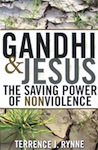
Dr. Terrence Rynne is the founder of the Marquette University Center for Peacemaking. His new book “Gandhi and Jesus, the Saving Power of Nonviolence” examines the intersections between the life of Jesus and the teachings of Gandhi. He has three presentations coming up in North Carolina, in Charlotte, Greensboro and Raleigh.
By chris
by chris
We were on our tour bus, about to leave the dorm where we had been staying, when a few of us saw her. She looked about sixty years old, and she looked like she could have been my grandmother. She came quietly around the corner of the building, went straight to the big trashcan, and started digging out our thrown-away lunches. She put what she could find in a bag, and she was gone.
Sheltered life that I had led, I had never before seen someone using a trashcan as a food source.By David LaMotte, Consultant for Peace
by David LaMotte, Consultant for Peace
Last month I received an email from Deborah Arca Mooney, a writer and editor with Patheos.com, asking if I would be willing to write an essay for an upcoming series on the future of Mainline Protestantism. I was a bit intimidated by the short list of “prominent thinkers and writers” who were also being asked, […]
By chris
by chris

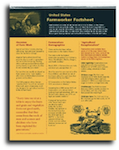
Farmworkers play a vital role in cultivating the food we eat everyday, and North Carolina has one of the largest farmworker populations in the nation. Even though 85% of our fruits and vegetables are harvested by hand, farmworkers remain largely invisible. This colorful and easy-to-read fact sheet was designed for congregations and community groups. Download a copy today.
By chris
by chris

The curriculum was written with the help of many individuals for churches to examine and reflect on farmworker issues in North Carolina in a biblical context. It is our hope that through the use of this curriculum, your congregation will lift up farmworkers and become a part of the North Carolina movement to improve the living and working conditions of those who harvest our crops.
By chris
by chris

Agriculture serves as the economic backbone for North Carolina, and farmworkers’ hand labor is needed to produce crops that bring in billions of dollars to the state’s economy each year. Despite this fact, farmworkers remain one of the state’s most economically disadvantaged and unprotected group of laborers. This colorful and easy-to-read fact sheet was designed for congregations and community groups. Download a copy today.
By chris
by chris
Farmworkers are some of our nation’s most vital workers, as their labor enables us to enjoy high quality, low-cost, fresh fruits and vegetables all year round. Despite farmworkers’ economic and cultural contributions to the communities where they live and work, they continue to be the some of the lowest paid, least protected, and unhealthiest workers in the United States. This colorful and easy-to-read fact sheet was designed for congregations and community groups.
By chris
by chris

This booklet is an offering to you from the North Carolina Council of Churches. When the Executive Board of the Council met in the Fall of 2002 to determine priorities for the Council’s program work, a prime concern was our North Carolina economy.
We are one of the top states for job loss due to the free trade agreements initiated by the federal government over the past ten years. The earnings gap between those in stable professions and those who serve in jobs such as health aides and childcare workers, farm workers and landscapers, is widening every year. Add to this a recession and wars, tobacco’s demise, flood and hurricane destruction, and a state budget crisis, and we end up with too many individuals and families in stress and fear and pain due to economic hardship.
By chris
by chris
Let’s get one thing straight: there is no worthwhile distinction to be made between video poker, currently banned in North Carolina with one notable exception, and the electronic “sweepstakes” game parlors sweeping the state.
By chris
by chris
The summer’s “short session” of the North Carolina General Assembly convened on May 12, a continuation of the 2009 session. Its primary task will be to adjust the 2010-11 budget adopted last year, though it can also take up bills that made it through one house last year, bills coming from study commissions, and bills amending the state Constitution.
By chris
by chris

In his life and mission, Jesus saw himself as actively preparing and serving the kingdom of God on earth, to
be as it is in heaven. He saw all of his disciples in the same light and as having the same purpose. Nowhere
in the prayer instructions of Jesus is the focus on getting the earth–or ourselves–to heaven. The heart of
the Lord’s Prayer is a request for heaven on earth. While this difference may seem subtle, its truth is at the very center of the call and practice of prayer and discipleship.
By chris
by chris

A Living Wage for North Carolina: An Introduction is intended to be just that: an introduction. Exhaustive research abounds on the subjects of the minimum wage and living wage. Yet often these studies—while thorough and informative—assume that the reader has a certain level of expertise. This brief resource seeks to be a primer for readers who are interested in fair wages but do not have the background or resources available to conduct an independent investigation.
By North Carolina Council of Churches
by North Carolina Council of Churches
While particular religious leaders have stepped into the fray of company/union conflicts in our state, the church as a whole has remained distant from the controversy of collective bargaining and unionizing. Often, mainline churches are host to corporate executives who may be community leaders and major donors, whom clergy are loathe to offend. Some churches remain aloof from so-called worldly or political concerns, imagining workplace struggles as beyond the domain of the spiritual.
By North Carolina Council of Churches
by North Carolina Council of Churches
The question of raising the tax on cigarettes appears to pose a conflict between positions taken by the North Carolina Council of Churches in previous years. On the one hand, the Council has warned of the health risks associated with cigarette smoking, supported measures leading to better health and providing more accessible health care, and called for steps to limit youth access to cigarettes. On the other hand, the Council has long supported a more progressive tax structure and opposed regressive taxes.
By North Carolina Council of Churches
by North Carolina Council of Churches
In each year of budget shortfalls, efforts have been made to fix the problem solely through cuts in spending. These proposed cuts have seemed most draconian and inhumane in programs to help people with mental illness, developmental disabilities, and substance abuse problems. But they have also impacted education, environmental protection, health care, abused children, and, in fact, virtually the whole spectrum of vulnerable people assisted by the state. While advocates for these people have succeeded in protecting some services by persuading legislators to raise revenues, many of these revenue-enhancers have been regressive in nature, falling disproportionately on people of low income.
By North Carolina Council of Churches
by North Carolina Council of Churches
From the shadows of banking towers of Charlotte and Raleigh to the small towns and hamlets far away from the bustling Piedmont, the much-ballyhooed economy has not lifted all boats. Many people are working hard but are not earning enough to make ends meet in today’s economy. For this reason, a “living wage” movement is gaining momentum around the nation. This movement seeks to educate policymakers and the community about the true costs of making ends meet and to require that local governments and their contractors pay a living wage to their employees.
By North Carolina Council of Churches
by North Carolina Council of Churches
North Carolina faces a financial situation that is easy to summarize: Tax cuts during the last half of the ’90’s have left the state with a revenue stream inadequate to provide the services which are expected by the state’s citizens and to respond to unexpected emergencies. However, because the state’s political climate is less than hospitable towards tax increases, solutions to this situation will be more difficult to implement.
Oliver Wendell Holmes once stated that “taxes are the price we pay for a civilized society.” In order for a civilized society to thrive, taxes at all levels of government must be sufficient to meet the legitimate needs of society, especially the modern equivalents of the biblical widows and orphans.
By North Carolina Council of Churches
by North Carolina Council of Churches
In North Carolina, over 1,000,000 people are directly affected by mental illness, developmental disabilities, or substance abuse. In recent years, the state and area agencies responsible for providing assistance have been plagued with a host of problems, including woefully inadequate funding, unconscionable delays in services, and appearances and allegations of mismanagement.
Providing the needed supports and services for vulnerable individuals is a critical role for state government and society in general. Without needed resources, people with disabilities and substance abuse problems go unserved or untreated. Not only does this create untold suffering amongst the individuals and their families, but it also places enormous strain on other institutions and systems (prisons, hospitals, homeless shelters, etc.). Proper support, service, and treatment can and will change the dynamics of our families and communities.
By chris
by chris

Rev. Dr. Douglass M. Bailey, Wake Forest Divinity School (Winston-Salem)
Because our time is so very important, let’s go quickly to reencounter our risen Christ. We will meet the resurrected Christ in the Gospel and in the city. Come with your imaginations, and let’s meet this Christ of Easter who comes to each one of us this very evening. The Easter encounter is timeless. It’s not just about disciples back then; it’s also very much about us, the disciples here and now. The spirit of the risen Christ appears to us, and words from His heart say to yours and to mine, “Peace be with you.”By chris
by chris
By North Carolina Council of Churches
by North Carolina Council of Churches
North Carolina’s state government is engaged in a debate that is occurring nationwide: should we restructure our electric utilities? This is an extraordinarily complex issue which will affect the daily lives of many people across the state, yet is almost completely unknown outside the halls of the General Assembly.
Understanding this issue, even in the broadest of terms, requires a step backward to look at the big picture of electric power and how we receive it. Currently, electric utilities are monopolies. There is only a single company from whom you can purchase your power, and it controls the entire process of producing and providing electricity. The rates charged are controlled by the government, ensuring that the utilities earn a reasonable profit without taking advantage of their position to overcharge customers.
By North Carolina Council of Churches
by North Carolina Council of Churches
Recent years have seen a proliferation of “special provisions” in the state budget. While special provisions are not new, their increased use to bypass parts of the legislative process and to weaken the voice of the people is troubling. Special provisions are items included in the state budget that go beyond the mere allocation of state money. Some special provisions are clearly relevant and appropriate in the budget (example: a requirement that certain independent groups receiving state money report back to the General Assembly on how they spend it or a requirement that part of an appropriation be spent in a specific way). Other special provisions have only minimal relationship to the budget (example: increasing the penalties for drug crimes).
By North Carolina Council of Churches
by North Carolina Council of Churches
The biblical prophet Amos declared “Let justice roll down like waters, and righteousness like an everflowing stream.” In the Hebrew Scriptures, conm1unity responsibility for the poor was built into community structure. Landowners were required to leave a portion of their crops in the field, and the poor and needy were entitled to glean fields for food God’s disapproval falls not on those who are poor, but on the kings, the unjust owners, and the oppressors: “God will defend the poorest, God will save the children of those in need and crush the oppressor God will free the poor man who calls on him, and those who need help. God will have pity on the poor and feeble, and save the lives of those in need” (Psalm 72).
By North Carolina Council of Churches
by North Carolina Council of Churches
The condition of children in our society must be a special and urgent concern for churches. From a biblical point of view, children are a blessing from God (Genesis 15:1), and poor children are seen as objects of God’s special care (Psalm 68:5). In the gospels, Jesus is presented as one who welcomed and treasured children (Matthew 18:1-5, Luke 9:46-48).
The church has a direct responsibility to nurture children of the family of faith and to provide services for children and families in special need. But the church also has a concern for the children of the entire society and, thus, for social policies that affect them.
By chris
by chris

The history of the North Carolina Council of Churches is the story of persons, religious leaders struggling to respond in faith to the signs of their times. Sometimes the signs could be clearly read; at other times they had to be discerned through a glass darkly. The records show that the leaders would prefer to be measured in terms of the fullheartedness of their responses rather than the accuracy of their discernment, in terms of their deeds rather than their words. This document outlines the first fifty years of the Council’s work in North Carolina.
NC Council of Churches
27 Horne St.
Raleigh, NC 27607
(919) 828-6501
info@ncchurches.org